A Hall That Says Hello: Seven Vintage Touches for Small UK Entryways
Hallways get a raw deal in British homes. We paint them magnolia, screw a coat rack to the wall, drop the post on the nearest flat surface and quietly close the door on the whole business. Which is a shame, because the entrance is the one space every visitor sees, and it sets the mood for everything behind it. If your sitting room is soft, layered and a little nostalgic, the hall deserves the same courtesy — even when it is six feet long and inherited from a Victorian terrace that never planned for pushchairs.
The good news is that entryways respond beautifully to vintage. They are small, so one good mirror, a slim table and a length of faded runner will do more than a vanload of furniture. Here are seven ideas that hold up in a rented flat, a 1930s semi and a draughty period house alike.
Let the floor do the talking
Start low. A runner is the least expensive way to make a hall feel considered, and vintage ones bring colour you would never dare specify new. Look for a faded Persian or Turkish runner worn to a soft wash rather than threadbare, or a plain hemp length if pattern feels like too much first thing in the morning. Measure the gap between your skirting boards: you want roughly 8–10cm of bare floor either side, not a rug jammed wall to wall. A rubber anti-slip underlay costs less than a takeaway and saves both the rug and your deposit.
Find the slimmest console you can
Most hall tables are too deep. Hunt for something under 30cm front to back — a half-moon demilune, a wall-mounted shelf-table, a narrow painted pine piece from a house clearance. Painted furniture suits this job: a soft sage, a chalky off-white or a powdery blue covers a multitude of scuffs, and you can touch it up with a sample pot rather than redoing the lot. If drilling is off-limits, a console that stands on its own two feet plus a strip of museum putty will hold a lamp and a bowl of keys without drama.
Choose a mirror that earns its wall space
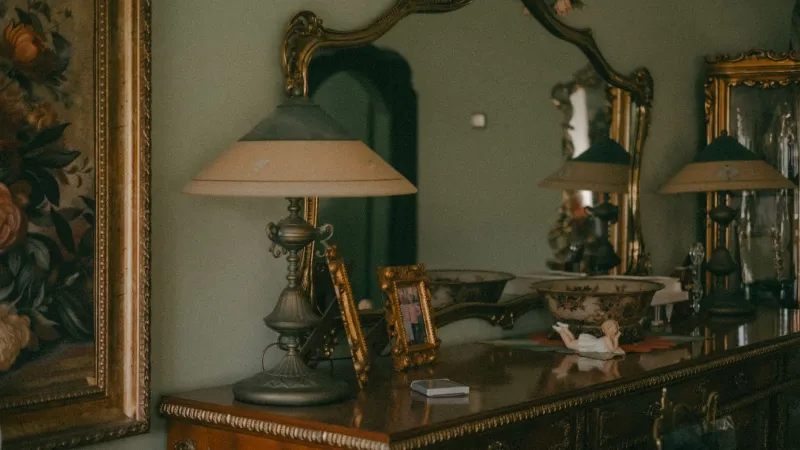
A hallway mirror should be generous enough to check a hat in and old enough to have a story. 1930s bevelled glass, a slim gilt frame, foxed silvering, the odd water mark — all welcome. Hang it so the centre sits roughly at eye level, and be aware that some people hold strong views about a mirror facing the front door. Whether or not you believe the superstition, a mirror on a side wall usually reflects more light anyway.
Paint the hooks and count the coats
A wooden peg rail is the single most useful vintage find for a hallway, and the most forgiving to restore: sand it back, prime the knots and finish in eggshell so it can be wiped. Three or four pegs is plenty. Be realistic about how many coats your household actually wears — the rest can live under the stairs. In period homes with lath-and-plaster walls, fix into a joist or use proper plasterboard anchors rather than trusting the rawl plugs that came in the box.
Light it low and warm
Nothing undoes a pretty hallway faster than a single bare ceiling bulb. A small table lamp on the console, a wall light with a fabric shade, or a pendant hung low with a warm bulb (around 2700K) will soften everything — the paint, the mirror glass, the pile of school letters. Put it on a timer so the hall is glowing when you come in with the shopping, and keep a spare bulb somewhere you can actually find it.
Give shoes somewhere to sit
A little chair is the most underrated hallway buy. A bedroom chair with a rush seat, a painted stool, a low Victorian nursing chair with the arms taken off — anything that lets a person sit down to wrestle with a boot. If space is genuinely tight, a folding stool hung on a hook does the job and disappears when the in-laws arrive.
Finish with one considered thing
Once the practical pieces are in, add a single decorative note and stop. A small ceramic dish for keys, a jug of dried honesty, a chipped enamel tray for the post, a lavender bag in the coat cupboard. One is charming; five is a car boot stall.
Keeping it nostalgic rather than cluttered
The trick with a small entryway is to keep the sightline clear. Aim for five objects at eye level in total, not fifteen. Use a lidded basket for gloves, hats and the plastic dinosaurs that follow children home, and empty it weekly. Follow a one-in, one-out rule for anything that sits out on display. If you rent, choose pieces that leave no holes you cannot fill — leaning mirrors, freestanding consoles, adhesive hooks rated for the weight.
And if your hall is dark, narrow, or painted a shade you inherited and cannot afford to change, remember that a warm lamp, one old mirror and a faded rug have been rescuing difficult British hallways for a very long time. Give it a proper welcome and the rest of the house will follow.