A Quiet Place for Everything: Vintage Blanket Boxes in the 2026 Bedroom
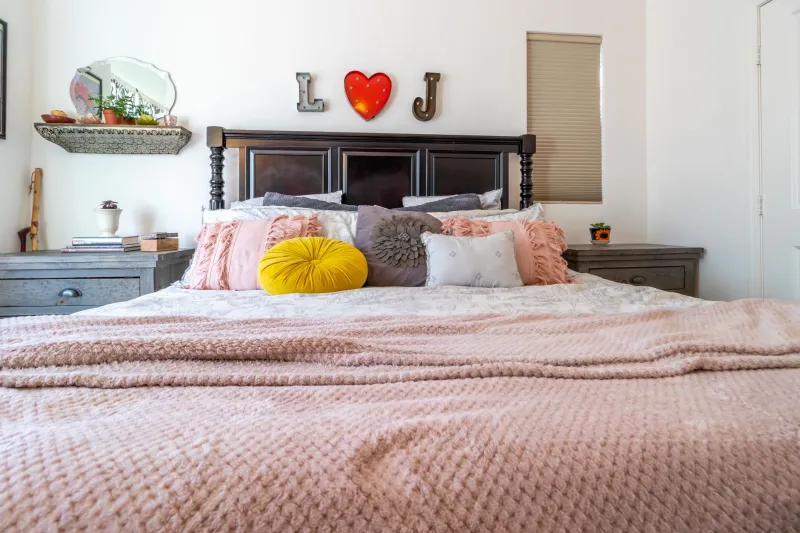
There is a particular sort of calm that arrives when a bedroom has somewhere to put things. Not a cupboard that swallows everything whole, and not a stack of baskets pretending to be a system. A vintage blanket box does the job with a little more grace: lid down, linen folded, the day tucked away. In a British bedroom, where space is often generous in charm and mean in square footage, that makes it a quietly brilliant piece.
Why the humble blanket box still works
A blanket box is not a glamorous antique. It is a workhorse with a pleasant face. It holds spare quilts, winter throws, off-season clothes, the linen that never quite fits in the airing cupboard. Put it at the foot of the bed and it becomes a bench. Tuck it beside a single bed and it becomes a bedside table with hidden depth. Slide it under a window and it turns a dead corner into a reading perch with storage underneath.
The appeal in 2026 is partly practical and partly emotional. We are still drawn to rooms that feel layered rather than bought in one go, and an old box brings a faint whiff of another household's order. A pine blanket box with worn corners, a painted Edwardian trunk, a cedar-lined chest with brass hinges — each has a useful sort of modesty. It does not demand to be the centre of attention. It simply sits there, holding the things you need and a few you cannot quite part with.
What to look for at fairs, charity shops and house clearances
Start with the lid. Open and close it slowly. A lid that has warped is not necessarily a dealbreaker, but it will need attention if it catches or refuses to sit flush. Look along the hinge line for split wood, rusted screws or the telltale dark staining of old water damage. Small repairs are part of the charm; a lid that has been badly forced is a different matter.
Check the base and the back, especially if the box has spent time in a garage or shed. Woodworm holes are common in older pine and not always fatal, but fresh dust beneath the holes is a sign to walk away or ask an expert. Give the inside a good sniff. Musty is manageable; damp and mould are not worth the trouble unless the piece is exceptionally lovely.
At charity shops, blanket boxes are often priced modestly because they are awkward to display. Look for solid joints, a sensible lid stay, and original brassware where possible. At fairs, ask whether the box has been recently painted. A thick coat of modern paint can hide repairs, but it can also be a perfectly good finish if the price reflects it. If you are buying an ottoman rather than a wooden box, press the lid and check the hinges or gas struts. Fabric-covered ottomans are softer in a small bedroom, but they are less forgiving of damp and harder to mend.
The small-space bedside solution
If your bedroom is tight, a narrow blanket box can do the work of a bedside table without crowding the bed. Choose one no taller than the mattress so it does not block the light or feel looming. A low box with a flat lid gives you a place for a small lamp, a glass of water and a book, while the inside holds spare bedding or winter jumpers. Keep the top styled lightly: a linen runner, a tiny vase, perhaps a single framed print propped against the wall. The point is not to fill every inch, but to let the box feel like furniture rather than a filing cabinet.
For a child's room, a blanket box at the end of the bed is a useful seat for story time. Just fit a lid stay or a soft-close hinge so small fingers do not get caught. Avoid heavy lids on low boxes, and never use a blanket box as a step or a toy chest without proper ventilation and a safety catch.
Restoration notes for hinges, lids and tired timber
Before you paint or wax, deal with the mechanics. Tighten loose hinge screws with a screwdriver that actually fits the slot; a worn screwdriver chews brass. If the screw holes are enlarged, push in a sliver of matchstick or hardwood with a little wood glue, snap it off flush, and re-drive the screw once dry. Replace missing hinges with a pair that matches the originals in size and finish. Brass hinges can often be cleaned with fine wire wool and a little metal polish, but go gently — you want to keep the age, not scrub it away.
If the lid drops heavily, fit a lid stay or a chain. This is especially important on deep blanket boxes where the lid can slam. Wax the hinge points lightly with a candle end or a touch of beeswax. Do not oil old hinges unless you know they need it; oil can attract dust and stain the wood.
Give the timber a gentle clean with a barely damp cloth and a little mild soap, then let it dry thoroughly. Avoid soaking old wood. If the surface is flaking, a soft brush and a vacuum on low suction will lift dust without damaging patina. For a very dry box, a thin coat of beeswax or a clear furniture wax will feed the grain and bring up a soft sheen.
Pastel finishes that stay on the right side of pretty
A blanket box is a good candidate for paint because it is not usually a precious antique. Chalk paint, milk paint or a simple eggshell can all work. The trick is to choose a colour that feels faded rather than sweet-shop bright. Try a soft dove grey, a pale eau de nil, a dusty blush or a warm buttermilk. These sit beautifully with vintage florals and allow the brass hinges to sing.
Paint in thin coats and sand lightly between them. If you want a gently worn look, rub back the edges with fine paper rather than attacking them with a sander. Wax over the top with a clear or slightly aged wax for a soft, touchable finish. Avoid heavily distressed paint in a small bedroom; too much chipping can make the room feel busy rather than relaxed. A single box with a softly worn lid is enough.
Lining it with faded florals
Lining the inside is the quiet delight of a blanket box. It hides old stains, softens the smell of timber and makes the box feel cared for. Measure the base and sides carefully, then cut a lining from a faded floral wallpaper offcut, a vintage linen sheet or a soft cotton print. Acid-free paper is safest for old wood. Fix it with a thin line of PVA diluted with water, or use a staple gun along the inside edges where the staples will not show. Press the paper gently into corners and allow it to dry fully before closing the lid.
A few lavender bags or a small cedar block will keep the contents fresh. Avoid sealing the box too tightly; a little air movement is good for textiles.
Styling it without the twee
The blanket box should look as though it belongs, not as though it has been staged for a shop window. At the foot of the bed, keep the lid clear or place a folded quilt on top. Beside a chair, use it as a side table with a tray for a lamp and a cup. In a small room, let it double as a window seat with a flat cushion in a faded stripe.
A vintage blanket box is not a statement piece. It is the quiet place where the spare duvet lives, where the winter blankets go in June, where the bedroom exhales. In a 2026 home, that sort of usefulness is rather lovely.