One Chair, Entirely Enough: Rescuing a Lonely Vintage Armchair for a Pastel Room
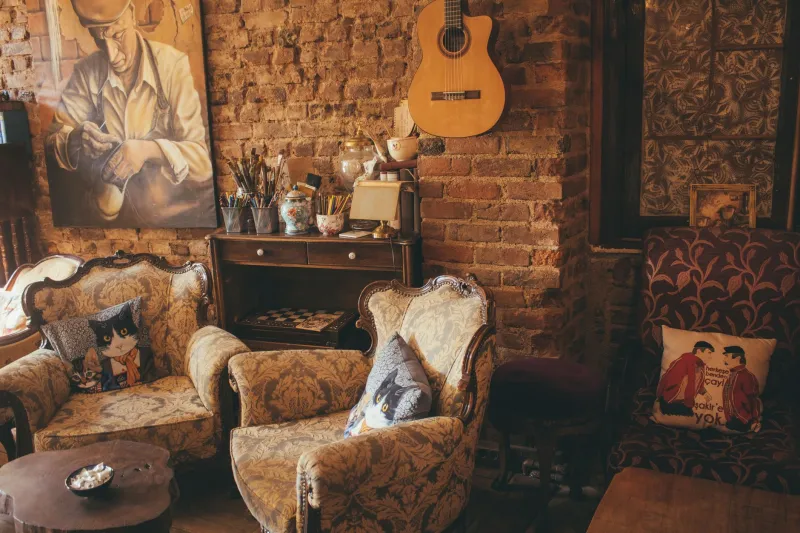
There is a particular sort of vintage armchair that seems to turn up alone. Not part of a matching three-piece, not paired with a sofa, not even pretending to belong to a suite. It sits near the back of a charity shop, under a dusty strip light, or at the edge of an auction room photograph with one cushion missing and a look on its face that says, quite plainly, I have been here a while.
And yet, in the right room, one chair is often all you need. A solo armchair can be the most deliberate seat in the house: a reading corner, a place for a morning coffee, the spot where the dog reluctantly allows a human to sit. In 2026, with so many of us trying to buy less and choose better, rehoming a lonely chair feels less like a compromise and more like a small, useful romance.
The quiet appeal of the odd one out
Matching furniture has its place, but a single armchair carries a different sort of charm. It suggests a story. Perhaps it was once part of a pair, and its companion went to a different home. Perhaps it lived in a front room that was only ever used at Christmas. Perhaps it has outlived more than one sitting room, more than one wallpaper choice, more than one family arrangement.
That history is part of the appeal. A lone chair asks you to make a decision rather than follow a set. It can be softly Edwardian, stoutly 1970s, or pleasantly nondescript in a way that lets the cushion do the talking. In a pastel-hearted home, it becomes a place to layer colour without committing to an entire suite: a faded rose throw, a duck-egg cushion, a little footstool in pale mustard. The chair does not need to match anything. It needs to belong.
Where lonely chairs tend to wait
Charity shops are the classic hunting ground. British Heart Foundation furniture shops, local hospice shops and the larger Oxfam furniture branches often have a revolving cast of armchairs, and the staff usually know whether something has been sitting for weeks. Auction houses are better for the older, quirkier shapes — look for general household sales rather than specialist antique auctions, where a single upholstered chair can go for surprisingly little. Facebook Marketplace is the wildcard: a listing with one blurry photo, collection only, and a price that suggests the seller mainly wants the space back.
Wherever you find it, ask the same quiet questions. Has it been stored somewhere damp? Does it smell of smoke or pets? Is it genuinely comfortable, or merely photogenic? A chair can be beautiful and still be the wrong chair, so sit in it if you possibly can. Five minutes of pretending to read a magazine will tell you more than any description.
Checking a chair before you commit
A lonely chair deserves a proper look, partly because you are taking it on and partly because you do not want to pay for someone else’s problem. Start with the frame. Rock the chair gently from corner to corner. A good frame should feel solid, with no creaking or flexing that suggests loose joints. Turn it upside down if the shop allows — or ask for a photo of the underside if you are buying online. Look for cracks, old repairs, woodworm holes and signs of water damage.
Then check the joints, especially where the arms meet the seat and where the back legs join the frame. A little movement is common in older chairs, but a wobbling arm is a negotiation point, not a deal-breaker. Upholstery should be assessed honestly. Tired fabric is fine if the price reflects it; a sagging seat is also fixable. What you want to avoid is a chair that is structurally tired and expensively upholstered. Springs are worth testing by pressing firmly into the seat. If you can feel them poking through, or if the seat feels like a hammock, factor in reupholstery or at least new seat cushions.
Finally, check the legs and castors. Replacement legs are available, but original ones add character. If the chair has castors, make sure they turn. Small details like this are not fussy — they are the difference between a chair that settles in and one that needs constant attention.
Making one chair look intentional
A single chair can look lonely if it is simply parked against a wall. It looks deliberate when it has a job. Put it in a corner with a small side table and a lamp, and it becomes a reading chair. Angle it towards the window and add a footstool, and it becomes a thinking chair. Place it beside a bookshelf with a throw over one arm, and it becomes the chair that everyone quietly wants.
Corner placement is often the kindest. It gives the chair a sense of purpose and stops it from floating in the middle of the room. If the corner is dim, a floor lamp or a wall light will do more for it than another cushion. A small rug underneath can also anchor the whole arrangement, especially in a rental where you cannot change the flooring.
Then layer softly. A throw draped over the back is forgiving and practical, particularly if the upholstery is faded or slightly worn. Cushions should feel collected rather than matched: a linen square in pale sage, a velvet one in dusty pink, perhaps a small embroidered number from a car boot sale. A footstool does not have to match the chair. In fact, it is often better if it does not — a wicker basket, a low wooden stool or a little upholstered pouffe can all work, provided it is comfortable underfoot.
The goal is not to hide the chair’s age but to let it sit comfortably among your things. A pastel room can take a stronger chair than you might expect. A faded terracotta armchair against pale pink walls is lovely; so is a soft grey chair with a butter-yellow cushion. Trust your eye, and give the chair a week or two to settle before you decide it is wrong.
A note on local upholsterers
If the chair needs more than a throw, a local upholsterer is worth their weight in gold. Ask in independent furniture shops, check local Facebook groups, or look for someone who has worked on similar shapes before. A good upholsterer will tell you honestly whether the frame is worth saving and will not push you towards a fabric you do not love. Choose a fabric that suits the chair’s age — a wool, a linen mix, a soft velvet — and keep the palette gentle if you want it to live happily in a pastel room.
Reupholstery is not always cheap, but it is often better value than a new chair of similar quality. And there is something deeply satisfying about giving a lonely chair another twenty years of useful life.
The chair that waited
A rescued armchair is never just a piece of furniture. It is a small act of faith in the future: a belief that the room will be used, that someone will sit there, that the chair has more stories to collect. In a British home in 2026, where so much is designed to be replaced, that feels quietly radical.
So if you see one sitting alone in a charity shop window, looking a little sorry for itself, do go in and sit down. You might not need it. But then again, one chair is often entirely enough.