Where the Keys Land: A Vintage Sideboard for the Practical Heart of the Home
There is a particular kind of British chaos that gathers just inside the front door: a school letter curling at the corner, three keys with no home, a charger for a tablet nobody can name, and a pile of post that has become structural. A vintage sideboard will not magically organise your life. But choose the right one, place it thoughtfully and give it a few gentle rules, and it can become the calm, pretty centre of a busy household.
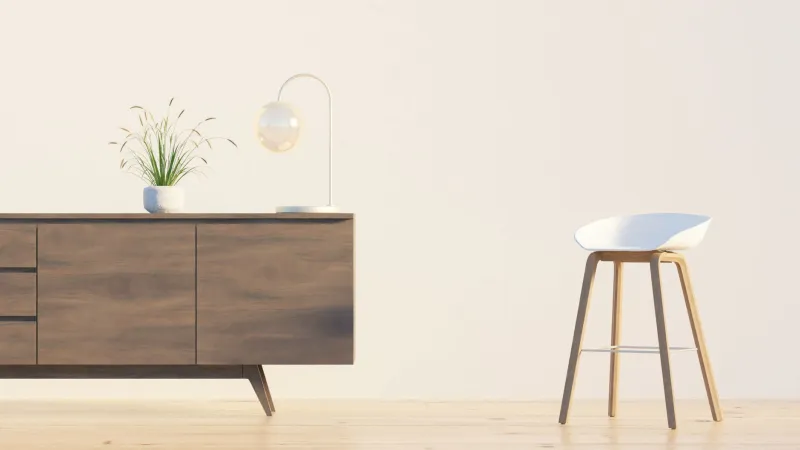
That is the appeal of the sideboard as command centre. It has the generous top surface of a hallway table, the storage of a small dresser and the soft, mid-century lines that sit happily in older British homes. In 2026, with so many of us trying to make one room do several jobs, a second-hand sideboard earns its place by being both useful and quietly lovely.
Start with the room, not the sideboard
It is tempting to fall for a swoony teak beauty online and then discover it blocks the radiator, swallows the doorway or makes the hall feel like a furniture warehouse. Before you shop, measure the wall, the doorway and the walking route. A sideboard needs breathing space above it, especially if you want a lamp, a little vase or a noticeboard. It also needs enough clearance underneath if there is a radiator nearby, and enough room in front for a person to open a drawer without performing a small ballet.
In a narrow UK hallway, look for a low, shallow sideboard rather than a deep dining-room piece. In a kitchen or family room, a longer sideboard can take the place of a console table and hold far more. The trick is to treat it like a piece of architecture: it should make the room feel more resolved, not more crowded.
Proportion, clearance and the honest tape measure
A common mistake is choosing a sideboard that is too tall for the space. If it sits under a window, the top should sit below the sill. If it is in a hallway, check that it does not become a shoulder-height obstacle when someone comes in with a pushchair or a week of shopping. Depth matters too. A 45cm-deep sideboard is easier to live with in a passage than a 55cm one, and it will leave more floor visible, which makes a small space feel kinder.
Also check the legs and the base. Splayed legs can look wonderful, but they can also catch a hoover or a passing shoe. A plinth base is more forgiving in a busy household. Neither is right or wrong, but the piece has to suit the way your home actually moves.
Drawer health: the bit worth being fussy about
This is where a vintage sideboard proves whether it is a bargain or a project. Open every drawer, every door and every flap. Drawers should glide without a fight, and they should not drop or scrape when pulled out. Look at the runners: wooden runners can be waxed, metal runners can sometimes be cleaned and adjusted, but broken or missing parts can be fiddly to replace. Check the handles and hinges, too. A wobbly handle is easy; a split drawer side is less so.
Look inside for signs of damp, musty smells, woodworm or heavy staining. A little surface wear is part of the story; a drawer full of frass or a soft, crumbly patch is a reason to walk away. If you are buying online, ask for a video of the drawers being opened and closed. It is a small request and it saves a long drive.
A pastel that behaves
If the veneer is already damaged, patchy or previously painted, a soft pastel can be a lovely way to give a sideboard a second life. Powder blue, pale sage, plaster pink and buttermilk yellow all feel gentle without turning the room into a nursery. A muted sage green is especially good in a hallway because it hides the odd scuff and looks calm beside coats and baskets.
Prep matters more than the colour. Clean away grease, sand lightly where needed and use a primer suited to the surface. Seal with a matte or eggshell varnish so the top can cope with keys, cups and the occasional school letter. If the wood is in good original condition, though, do not feel you must paint it. A well-fed teak or walnut sideboard has a warmth that pastel paint cannot copy.
Hiding the cables without hurting the furniture
A command centre usually means chargers, a lamp, perhaps a small radio or a broadband router. Cables can be managed without drilling a hole through a lovely old back panel. Use adhesive cable clips in a colour close to the wall, or a slim cable trunking along the skirting. If there is already a gap at the back, feed cables through that. A shallow woven basket at the back of the top can hide a multi-plug extension lead, but keep it ventilated and do not overload sockets.
For charging, a lidded basket or a designated drawer with a felt insert works well. Have one charging cable for each device that genuinely needs one, labelled with a small paper tag if necessary. The aim is not a showroom; it is a system that does not require dismantling the whole arrangement every time someone needs a USB-C.
The surface rules that keep it calm
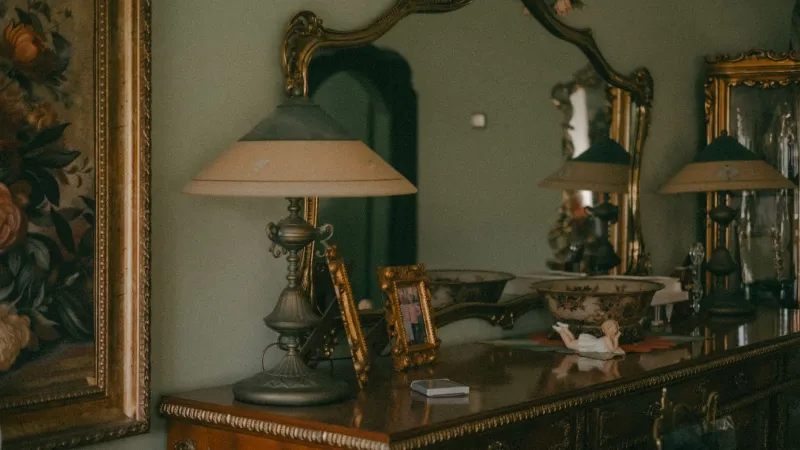
A sideboard top becomes a dumping ground when it has no zones. Give it three: a landing spot, a storage spot and a pretty spot. The landing spot is a small tray for keys and sunglasses. The storage spot is a lidded box or a shallow basket for post that needs dealing with. The pretty spot is a lamp, a little vase or a framed print. That is enough. When everything has a home, the surface stays clear enough to be useful.
Try the three-object rule: one light, one living thing and one practical item. A small lamp, a jug of dried stems and a tray of keys will look considered; ten ornaments and a tangle of wires will not. Keep a slim folder or letter rack inside one drawer for school admin, and clear it weekly. The same goes for receipts and takeaway menus. A sideboard should not become a filing cabinet with legs.
A command centre that actually works on a Tuesday
The test of any family command centre is not how it looks on a Sunday morning. It is whether it still works when the school run is late and the dog has eaten something it should not have. Put keys on a hook inside a cupboard if children are small, or on a tray high enough to be safe. Keep a small pen pot and a pad of sticky notes in one drawer. Store chargers by device, not by hope. And give the top a two-minute reset each evening: post into the box, keys onto the tray, stray socks back upstairs.
If the sideboard is in a hallway, add a shallow basket underneath for shoes or library books. If it is in a kitchen, use the drawers for candles, matches and the good scissors. The piece should make the room work better, not simply look as if it might.
Sourcing with a practical eye
Charity furniture shops, auction rooms, local Facebook Marketplace listings and house clearance sales are all good hunting grounds. Ask about provenance if it matters to you, but prioritise condition and proportion. A plain little sideboard with sound drawers will serve you better than a showpiece with a sticking door. Take a tape measure, a torch and a list of your measurements. If you are buying for a hallway, check the width of the front door too.
A vintage sideboard does not have to be precious to be lovely. Its job is to hold the ordinary stuff of family life and still make the hallway feel like somewhere you want to come home to. Choose one with honest bones, give it a soft colour if it needs it, and let the keys land somewhere kind.